
With Amendment 83, we’re shooting ourselves in the foot
2026/10/27 | Colorado
With Amendment 83, we’re shooting ourselves in the foot
Colorado’s vague constitutional amendment would declare hunting the “preferred means” of managing all wildlife—undermining the public trust and scientific wildlife management
By Matt Barnes
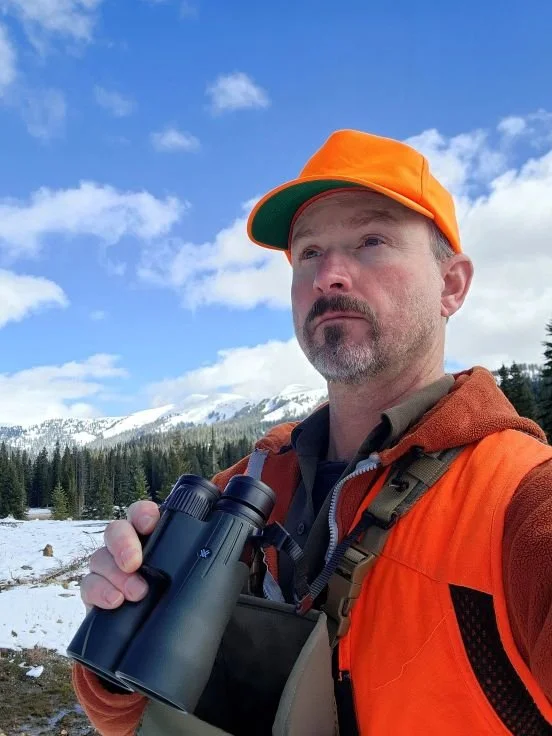
Humans have been hunters and gatherers for most of our history, and that identity is perhaps most enshrined in American culture, as a result of the mythos of the frontier. It’s one of the reasons that I take to the woods each fall, in hopes of filling the freezer.
Americans generally support hunting and fishing. Westerners support hunting deer and elk, turkeys, and ducks; less so, bears and mountain lions; and are more likely to support hunting than trapping, according to a recent report for the Association of Fish and Wildlife Agencies. And if I tell you I hunt for meat, you’re more likely to approve than if I tell you I’m after a trophy bull elk.
As a hunter, conservationist, and citizen, I find fatal flaws in Amendment 83, the vague and poorly written “Right to Hunt” ballot measure. It not only creates a unique right for a single special interest; it elevates that right above our responsibility to be ethical hunters, and the state’s responsibility to restore and manage wildlife populations. Additionally, it declares hunting, trapping, and fishing the “preferred means” of managing all species of wildlife; and restricts the state’s ability to otherwise manage all species.
It is at odds with some of the foundational tenets of the North American Model of Wildlife Conservation, the system that ensures wildlife is managed sustainably, allocated equitably, and protected for future generations. The foundation of the North American Model is that wildlife is held as a public trust, belonging to all citizens, managed scientifically and democratically.
We already have strong protection for hunting and fishing in Colorado statute. Title 33 declares that “the state shall utilize hunting, trapping, and fishing as the primary methods of effecting necessary wildlife harvests” (CRS § 33-1-101(4)); designates 36 species and groups thereof as game, and defines hunting to include trapping (CRS § 33-1-102); and authorizes licenses for hunting, trapping, and fishing (CRS § 33-4-102).
As a principle, rights come with responsibilities. Amendment 83 converts a privilege into a right, without a corresponding responsibility, either for individuals (no responsibility for ethical hunting, fair chase, etc.), or for the state (no responsibility to restore and/or manage native wildlife populations). While such responsibilities may be in statute, they would be subordinate to this constitutional right with its undefined “traditional methods” and “preferred means.”
“Traditional methods” could mean almost anything, including those that the voters of Colorado have already rejected as unethical or inhumane, including leghold and instant-kill, body-gripping traps, poisons, and snares (Colo. Const. Article XVIII, § 12b), as well as hunting bears with hounds and over bait, or in the spring when females are raising cubs (CRS § 33-4-101.3). The most traditional methods of all would be hunting with spears and running herds off cliffs—unthinkable today, but arguably protected by this “right.”
Subsection (4) of the Amendment’s full text creates a new burden of proof for the state, such that any wildlife statute or regulation could be ruled unconstitutional unless the state can prove that it is:
necessary for sound scientific wildlife conservation and management, public safety, or to preserve the future of hunting and fishing opportunities for all species statewide.
“All species statewide” includes approximately 960 vertebrate species, 182 Species of Greatest Conservation Need, and 31 listed as state threatened or endangered (under CRS § 33-2-105), and others not yet fully recovered.
This will hamstring our agencies and almost certainly result in years of costly litigation. Moreover, this is directly opposed to the tenets of the North American Model that wildlife should be managed scientifically and only be killed for a legitimate purpose.
We don’t have comparable rights to hike, camp, float, or ski, or even to photograph wildlife—all of which would pertain to far more people.
Our ability to hunt and fish depends on a social license to operate. Amendment 83 will erode public support for hunting and fishing, threatening its future. With Amendment 83, we’re shooting ourselves in the foot.
Let’s find a better way to protect hunting and fishing, far into the future. That will include protecting public lands, defending public access to public rivers, taking bold steps to combat chronic wasting disease, finishing the restoration of native species, managing to reduce human-wildlife conflict, promoting sound science—and doing all of these things with, rather than against, the larger conservation community.
Author’s note
A slightly edited version of this (minus the links) was published as a guest column in Colorado Politics, October 27, 2026.