Furbearers and human-bear coexistence at the Parks and Wildlife Commission meeting
2026/07/17 | Colorado: Southern Ute Indian Reservation
Furbearers and human-bear coexistence at the Parks and Wildlife Commission meeting
The July Colorado Parks and Wildlife Commission meeting, involving contentious debates leading up to votes on furbearer management, was the first ever held on one of the two Indian reservations in the state. I made a comment about human-bear conflict reduction.
By Matt Barnes
Harvest of furbearers and sale of furs
I’ve attended numerous Colorado Parks and Wildlife Commission meetings over the last half-dozen years, and this was one of the more acrimonious ones. And wolves weren’t even on the agenda. This time it was furbearers, a category of 17 species, most of which are mesocarnivores, and one of which, our largest rodent, the beaver, is a keystone species or “ecosystem engineer.” The Commission considered proposals for bag limits, a requirement for checking and sealing of beavers, and for a ban on commercial sales of wild-harvested fur in Colorado; the first two passed, the fur sale ban did not.
We need to keep the big picture in mind. We are still building back the wildlife populations that were destroyed in the so-called frontier era, and by unregulated market hunting. Beaver populations in the West were essentially trapped out by 1840, and what records we have indicate that millions were taken. So far we’ve done wildlife restoration largely by making wildlife valuable, but harvests regulated. That approach, the North American Model, has worked very well for some wildlife, but not all.
We are also still working on rangeland and forest restoration and resilience. For example, riparian restoration—and it’s no accident that the best methods for riparian restoration are beaver dam analogs.
There are very few people shooting or trapping more than two in a year, but a handful of people taking significantly more, according to CPW’s survey data.
Beavers aren’t lost or gained as a statewide population so much as stream by stream. So, even if the total statewide recreational take is actually quite low and apparently sustainable, some regulation makes sense, if it prevents localized overharvest. Season or daily bag limits might have an effect on one trapper or one stream, but most likely no effect across the southern Rockies. In my opinion, a seasonal limit would make more sense than a daily limit, but the Commission only discussed daily limits. The staff recommendation was for a bag limit high enough that it would almost never be reached. In the end, the Commission voted on a bag limit of two of any species. Even though that will have very little effect on recreational take, the hunters and trappers in the room seemed to take it as an assault on their way of life.
As for a fur sale ban, I don’t think it would get us the rest of the way to restoration. And of course, the proposal generated intense acrimony. The Commission voted to terminate rulemaking, ending the debate.
What we really need to do is to figure out how furbearer populations compare to their potential, or what statute calls the optimum carrying capacity of the habitat. For most of the species, we have only rough estimates if any of carrying capacity. For beavers, we have an estimate of ~53,000 in the state, which is almost certainly still well below historic abundance.
Take of nuisance beavers, which falls under the jurisdiction of the Colorado Department of Agriculture, and is neither regulated nor measured, almost certainly exceeds the avocational harvest, which falls under the jurisdiction of CPW. So, if we are to grow the beaver population further, we need to work with CDA and agricultural producers to incentivize conflict prevention, including preventative methods for keeping beavers out of irrigation ditches.
There will always be some conflict, but right now landowners and managers have no incentive not to kill beavers. I think that is where CPW and CDA need to work together to find a solution.
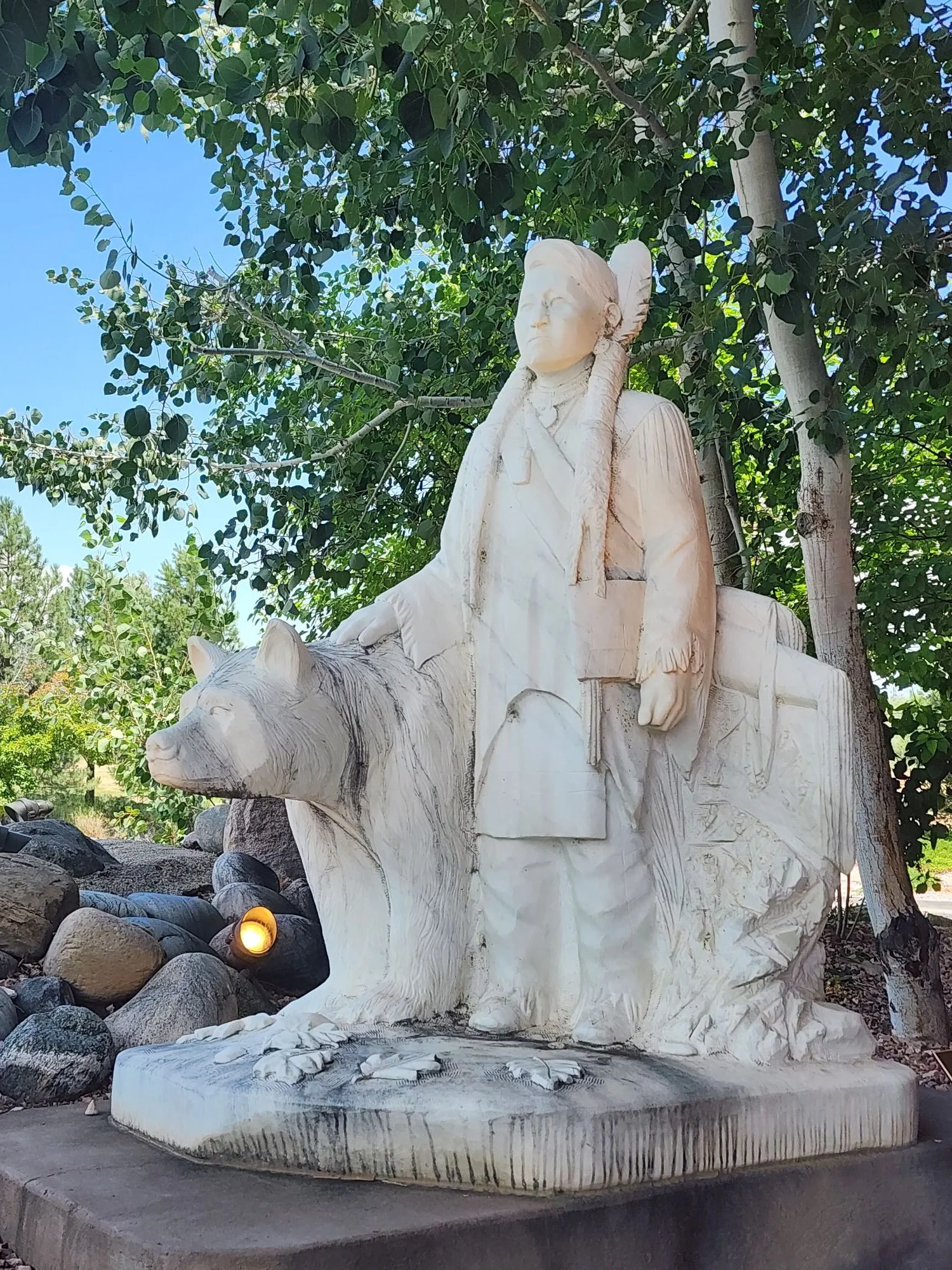
The July 2026 Colorado Parks and Wildlife Commission was the first ever held on one of the two Inian reservations in the state, at the Southern Ute Indian Tribe’s Sky Ute Casino events center.
I made a comment on human-bear coexistence.
Comment on human-bear coexistence
I offered a comment on human-bear conflict reduction, considering that the Negligently Luring Bears Act (HB26-1342) takes effect on August 12, and referring to my experience with bears elsewhere, particularly in Yosemite. It was somewhat truncated to fit in two minutes, which is all that each person gets.
Good afternoon, Commissioners, and welcome to southwest Colorado.
I’m Matt Barnes, a rangeland scientist and wildlife conservationist. I would like to thank you and staff for the great work that you do.
Discussions at this meeting have shown that wildlife management is about more than population numbers. It’s also about how we interact with wild animals.
I’d like to thank the DNR, the General Assembly, and especially our local Representative Katie Stewart for sponsoring the Negligently Luring Bears Act. This is important even if black bears are one of the few species more abundant now than historically.
I began my career chasing black bears out of campgrounds and parking lots in California, and trapping grizzly bears in north Idaho.
Yosemite is a remarkable success story in human-bear conflict. It was 1998, the height of bear conflicts, and we had bears breaking into vehicles almost every night. I had to kill a bear that threatened people. Now those are both rarities. That success can be traced back to programs began that year and in subsequent years.
There were four things that came together, none of which were sufficient alone. First, we needed technical solutions: not just aversive conditioning, but accessible food and trash storage. Yosemite also began a massive public education campaign. Neither worked until they were combined with meaningful enforcement, but there also couldn’t be enforcement without technical solutions and education. Fourth, lethal removal was retained as a backstop for bears that didn’t learn the lessons we tried to teach. But like the other three, it was necessary but insufficient.
I submit that other cases of human-wildlife conflict, whether they involve bears, wolves, or maybe even beavers, may be addressed by similar combination of proactive conflict prevention and minimization, public education, enforcement, and lethal control as a backstop.
As for bears, we have bear-resistant trash cans, but little incentive for people to invest in them. Fortunately, we have CPW’s bear grant program.
The new Act takes effect August 12. It lowers the culpability from intentionally to knowingly luring bears. That’s important because until now, we haven’t really had an enforceable statute.
We also need education, and I just attended an informal presentation by our excellent area wildlife staff here. I hope staff will be giving more public presentations over the next few months, especially in communities like mine with persistent human-bear conflict.
That won’t end human-bear conflict, and we’ll still need to remove individual bears when the situation warrants. But I look forward to the work of reducing conflicts.
Thank you, and thank you to the staff who do the difficult work on the ground.